23.6% of Filipino Children Under Five Are Stunted. What Does That Really Mean?
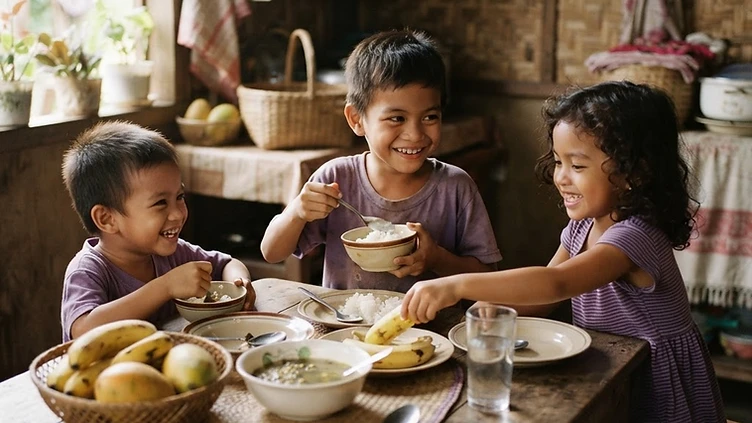
23.6% of Filipino Children Under Five Are Stunted. What Does That Really Mean?
The number is shocking. But the story behind it matters even more.
23.6%.
At first glance, it looks like another statistic.
But here's what it actually means:
About 2 in every 10 Filipino children under five are affected by stunting.
Stunting means a child is too short for their age according to child-growth standards, and it is an indicator of chronic or recurrent undernutrition.
It doesn't simply mean:
"That child is short."
It means their growth has been affected over time by nutritional and other factors.
And behind every percentage is a real child.
A child growing.
A family trying to provide meals.
A parent making decisions with the information and resources available to them.
Now the number feels different, doesn't it?
According to the Philippines' 2023 National Nutrition Survey, stunting affected 23.6% of children under five, while wasting affected 5.6%. The same survey found that 31.4% of households experienced moderate to severe food insecurity.
But this isn't a story about blaming parents.
And it isn't a story about blaming one food.
It's a story about understanding the bigger picture.
🥣 What does "food poverty" actually mean?
Here's another number that deserves attention.
In 2025, UNICEF and the Philippine National Nutrition Council reported that:
1 in 2 Filipino children under five are living in child food poverty.
Wait.
Does that mean half of Filipino children aren't eating anything?
No.
And this is where the terminology matters.
Child food poverty refers to children eating from fewer than five of eight essential food groups in a day.
Those groups include foods such as:
🥛 Dairy 🥚 Eggs 🐟 Meat, poultry and fish 🌾 Grains and roots 🥜 Pulses and nuts 🥕 Vitamin A-rich fruits and vegetables 🍌 Other fruits and vegetables 🤱 Breastmilk
UNICEF reported that 13% of Filipino children under five were experiencing severe food poverty, meaning they were eating from just two or fewer food groups.
That's a very different way of looking at hunger.
A child can have food in front of them.
But still not have enough variety in their diet.
And that distinction matters.
😳 Here's the part that really surprised us
Among Filipino children aged 6–23 months, only about 1 in 5 meet the minimum dietary diversity needed for healthy development, according to UNICEF's 2025 reporting.
That means many young children are eating—
but their diets aren't diverse enough.
And here's another uncomfortable number:
67% of households in the Philippines cannot afford even a nutrient-adequate diet, according to UNICEF's 2025 analysis.
So when we talk about nutrition, we have to talk about more than:
"Just eat healthier."
Healthy food needs to be:
available.
affordable.
accessible.
culturally appropriate.
And understandable.
🇵🇭 Same country. Very different realities.
The national average can hide what's happening in different parts of the Philippines.
Nutrition challenges aren't evenly distributed.
Some communities face substantially greater challenges than others because of poverty, geography, food access, climate shocks, local food systems, and other factors.
UNICEF's recent work in the Philippines emphasizes that food systems, poverty, agriculture, health, education, and social protection all interact with children's nutrition.
So here's the bigger question:
Can we really talk about nutrition without talking about the environment surrounding food?
We don't think so.
🥛 And where does dairy fit into all this?
This is where we need to be careful.
LactoGo is NOT saying lactose intolerance causes malnutrition.
It doesn't.
LactoGo is NOT saying dairy prevents malnutrition.
It doesn't.
And LactoGo certainly isn't trying to tell parents what their children should eat.
The point is different.
Dairy products are one of several food categories that can contribute nutrients to diets, depending on the specific food and the overall dietary pattern.
And some families also have questions about lactose.
That's where things can get confusing.
"Lactose-free" doesn't mean "dairy-free"
These two labels are often treated as though they mean the same thing.
They don't.
Lactose-free generally refers to a product where lactose has been removed or reduced to a specified level.
Dairy-free generally refers to the absence of milk-derived ingredients.
They're different concepts.
And when you're standing in a supermarket with a child beside you, trying to work out what a label means...
You don't necessarily want a 40-page nutrition textbook.
You want clarity.
🏷️ Sometimes the important information is hiding on the back
Look at the front of a package.
Everything looks simple.
Then turn it around.
Suddenly you have:
Ingredients.
Nutritional information.
Allergen information.
Terms you've never heard before.
And then:
"Okay... what does all of this actually mean?"
Parents shouldn't have to become professional label detectives.
That's one of the problems LactoGo is interested in solving.
🔍 Meet LactoLens
LactoLens is being developed as a food-information tool that helps users explore ingredient information from products.
The idea is simple:
Point. Scan. Explore.
Instead of manually trying to decode every label, users can use LactoLens to explore information about the product they're looking at.
But here's something extremely important:
LactoLens does not diagnose you.
It doesn't determine whether your child has lactose intolerance.
It doesn't determine whether a food is medically safe for a particular person.
And it shouldn't replace professional medical advice.
It's an information tool.
Because knowing more about a label and receiving a medical diagnosis are two completely different things.
💜 "Okay, but I still have questions."
That's why we're building Luna.
Luna is LactoGo's Dairy Companion—an AI-powered experience designed to help people explore questions around dairy and lactose.
You might ask:
"What's the difference between lactose-free and dairy-free?"
Or:
"What does this ingredient mean?"
Or:
"Why do different dairy products have different labels?"
Instead of opening 12 browser tabs...
You ask.
You explore.
You learn.
And when a question goes beyond what an AI should answer?
It should know that too.
📚 That's where LactoGo Learn comes in
The internet already has plenty of information.
The problem?
Sometimes there's too much.
Some articles are incredibly technical.
Others oversimplify everything.
Others sound like they were written by a robot who hasn't met a human being. 😂
So we're building LactoGo Learn around a simple principle:
Real questions. Simple explanations. Reliable sources.
No miracle claims.
No fear.
No "THIS ONE FOOD WILL CHANGE YOUR LIFE!"
Just useful educational content.
📖 And your family's experience is personal
That's the thinking behind Dairy Diary.
Families have different routines.
Different foods.
Different cultures.
Different experiences.
Dairy Diary gives users a place to record and reflect on their own dairy journey.
But again:
A diary records experiences. It doesn't diagnose their cause.
If someone has persistent symptoms, concerns about a child's growth, or questions about their nutritional needs, that's a conversation for a qualified healthcare professional.
🌏 This is bigger than lactose
When we started LactoGo, the idea seemed simple:
"People have questions about lactose."
But listening to families changed the question.
We started hearing:
"What's actually in this?"
"How do I understand this label?"
"What's the difference between these products?"
"Why is finding a simple answer so difficult?"
And suddenly we realized:
This isn't only about lactose.
It's about the relationship between:
People.
Food.
Information.
Technology.
Families.
❤️ Technology won't solve malnutrition.
Let's be completely honest about that.
An app won't solve food insecurity.
A scanner won't solve poverty.
An AI companion won't replace a pediatrician, dietitian, nutritionist, or public-health professional.
And LactoGo isn't claiming that it can.
The Philippines' nutrition challenges involve much bigger systems—including food prices, household income, food environments, agriculture, healthcare, education, social protection, and climate-related pressures.
But technology can help with one thing:
Making information easier to understand.
And sometimes that's where better decisions begin.
🇵🇭 Why this matters to us
The Philippines isn't just a market on a spreadsheet.
It's a country where food is deeply connected to family.
To celebration.
To culture.
To childhood.
To memories.
Think:
🍕 Pizza night.
🧀 Queso.
🍦 Ice cream.
🥛 Milk.
🥣 Yogurt.
☕ Morning coffee.
🎂 Birthday cake.
Food isn't just something we consume.
Food is part of our memories.
And that's why our philosophy is:
Don't Skip Your Dairy Memories.
We're not here to tell families what they should eat.
We're building tools to help them explore, understand, and navigate food information more easily.
So what does 23.6% really tell us?
It tells us that nutrition isn't an abstract problem.
It's happening to real children.
It tells us that food poverty isn't simply about whether someone ate today.
It can also be about what was available, what was affordable, and how diverse that diet was.
It tells us that the Philippines still has major nutrition challenges.
And it tells us something else:
We need better conversations about food.
Not more fear.
Not more misinformation.
Not more generic AI answers.
Better information.
🥛 We heard you.
You asked:
"What's actually in this?"
"What's the difference between lactose-free and dairy-free?"
"Can someone explain this label?"
"Why is finding a simple answer so difficult?"
We listened.
And we're building:
🔍 LactoLens — Explore food and ingredient information.
💜 Luna — Your Dairy Companion.
📚 LactoGo Learn — Understand dairy and lactose topics.
📖 Dairy Diary — Record and reflect on your own journey.
Not a doctor.
Not a diagnosis.
Not a replacement for healthcare.
Just technology designed to help families understand the food information in front of them.
Because every family has a food story.
And every family deserves information they can understand.
LactoGo
We heard you.
Don't Skip Your Dairy Memories. 💜🥛
Sources & Further Reading
Department of Science and Technology — Food and Nutrition Research Institute (DOST-FNRI) 2023 National Nutrition Survey — Philippine Nutrition Situation DOST-FNRI — Philippine Nutrition Situation
UNICEF Philippines + National Nutrition Council Child Food Poverty in the Philippines — 2025 UNICEF Philippines — National Nutrition Council and UNICEF rally to end child food poverty
UNICEF Philippines Assessment of Food Systems for Children in the Philippines UNICEF Philippines — Raising the Bar: Understanding and Solving Chronic Malnutrition
UNICEF Data Child Malnutrition / Global and Regional Estimates UNICEF Data — Malnutrition Data
UNICEF Philippines What's really in our children's food? UNICEF Philippines — Children's Food Environment
LactoGo provides general educational and informational content and tools. It is not intended to diagnose, treat, cure, or prevent any medical condition. Information provided by LactoGo should not replace advice from a qualified healthcare professional.